What to do with lawn clippings on the Sunshine Coast
After a light trim, fine clippings can often stay on the lawn. After wet weather or a catch-up cut, collect thick clumps. If you’re using a garden organics bin, check the council rules for the property first.
QuickMow · 28 November 2026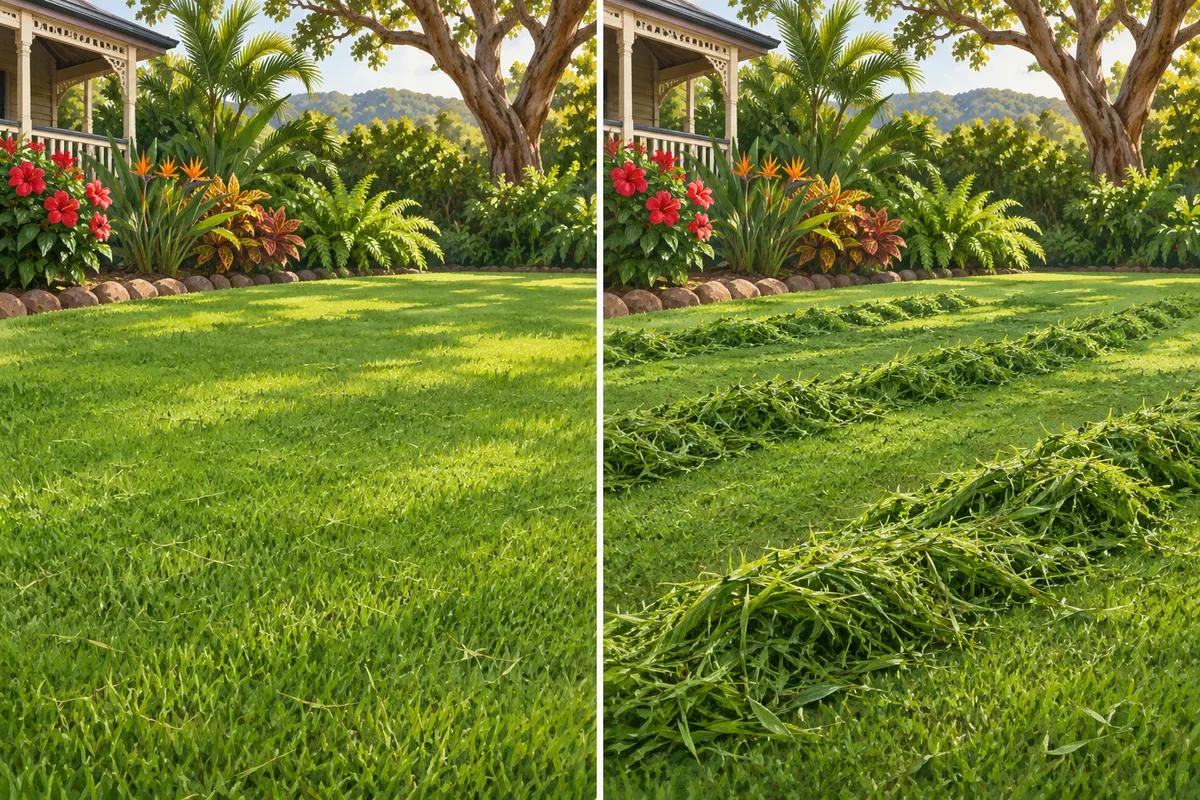
What to do with lawn clippings on the Sunshine Coast
When to leave clippings and when to collect them
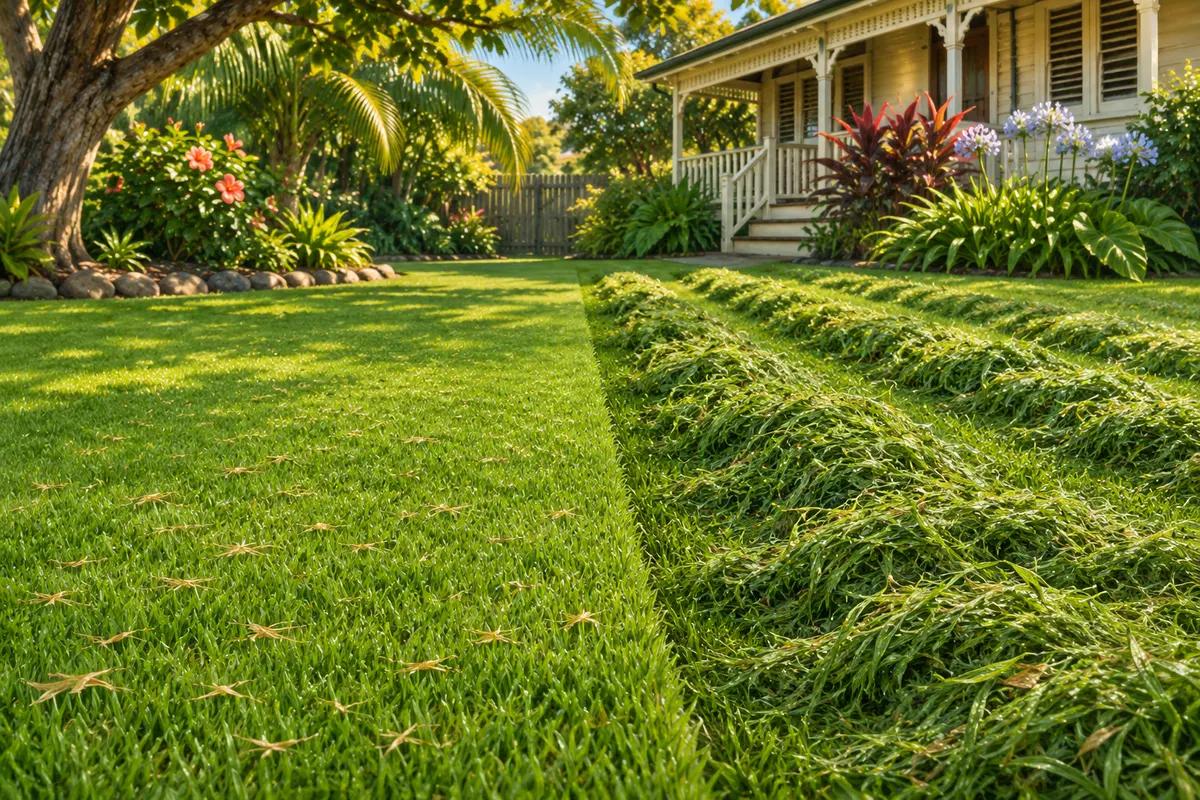
Look at what the mower leaves behind. Short, dry cuttings that fall between the blades can break down in place. That’s grasscycling. It is most practical when you’re trimming regularly and taking off a small amount of growth at a time. If cuttings form visible ropes or mats, rake the piles up rather than leaving them on top of the lawn.
The University of California’s lawn guide recommends removing no more than roughly a third of the leaf in one cut for effective grasscycling. Treat that as a mowing guideline, not a target height: lawns differ, and a badly overgrown lawn may need more than one trim to get back to a manageable height. Where possible, wait until the grass is dry and footing is safe.
Quick decision: Dry, fine and evenly spread? Leave it. Wet, heavy or piled up? Collect the worst of it and sweep any clippings off paths and driveways.
Can lawn clippings go in the garden organics bin?
Start with the council that services your address. Sunshine Coast Council publishes the accepted garden materials and collection arrangements for its garden organics service. Noosa Shire Council operates a separate service, so use Noosa’s guidance for a Noosa address rather than assuming the two services are interchangeable.
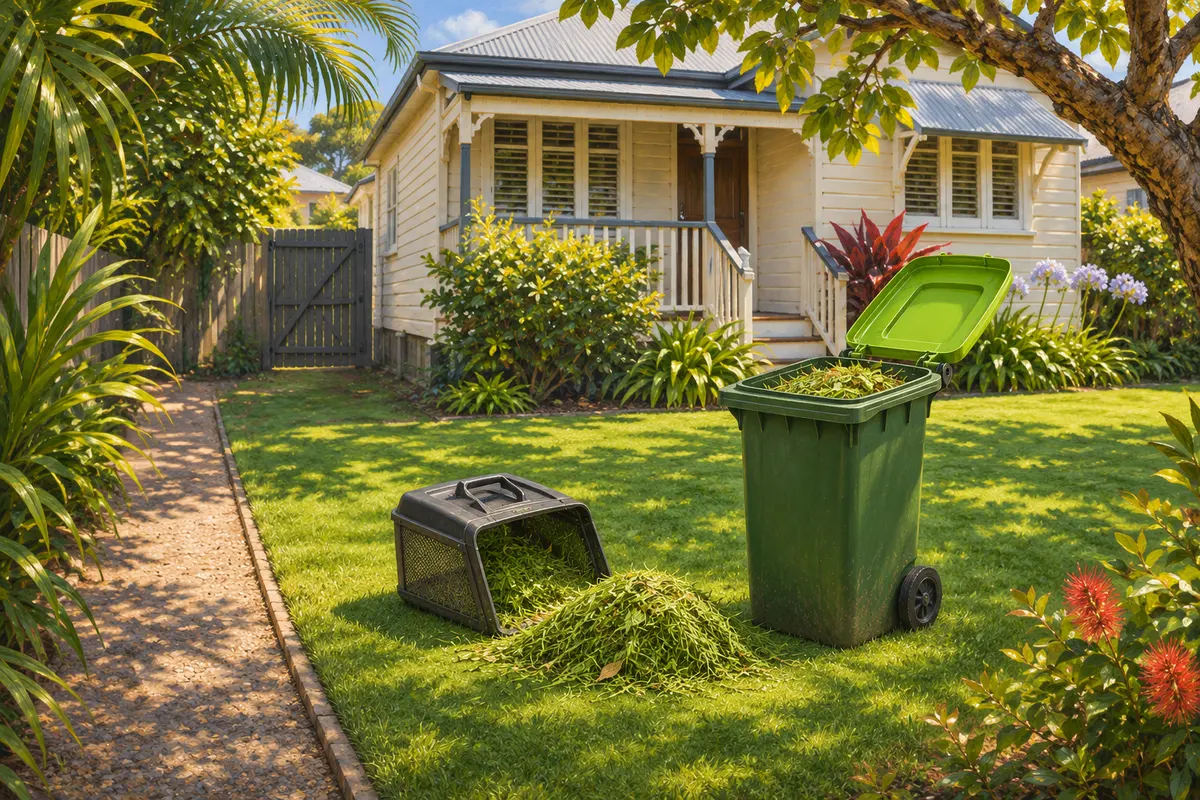
Keep garden material separate from plastic bags, packaging and other rubbish. Check council instructions if the cuttings are mixed with soil, weeds or other garden debris. If the bin is already full, check local drop-off options or arrange offsite removal where available. Don’t blow loose clippings into the street or gutters; sweep them up for the appropriate disposal option.
Plan for the amount of grass the next mow will produce
A short, regularly maintained lawn might leave little to clear. The same yard after several fast-growing weeks can fill a catcher repeatedly. Check the height and moisture of the lawn before choosing a clipping option. For a rental handover, consider whether you need paths, edges and hard surfaces cleared as well as the lawn itself.
- Leave fine clippings
- Best for a light trim with no visible piles.
- Use a garden bin
- Check accepted materials, bin access and spare capacity.
- Arrange removal
- Consider it for a larger cut or when no suitable bin is available.
If you’re arranging a mow, tell the provider what the lawn looks like and agree how the clippings will be handled before work starts. QuickMow shows the options available for the selected job after you check the address; a suburb guide alone doesn’t confirm availability.
Do a one-pass test before you mow the whole yard
- Read the ground. Wait if walking leaves wet footprints or soft wheel ruts, or if the slope is slippery. A dry-looking leaf does not mean the soil underneath is firm.
- Measure in a few places. Check the thickest growth as well as the easy open area. As a rough example, grass averaging 90 mm can be trimmed to about 60 mm under the one-third rule, provided that suits the grass type and the mower's settings. Don't use 60 mm as a universal mowing height.
- Cut one short strip and stop. The result should look evenly spread without ridges, ropes or mats of cut grass. If it leaves heavy lines, raise the cutting height, wait for drying or switch to collection. Check the strip a second time before continuing.
- Check the finish. If you left clippings, look along the overlap between passes where piles tend to form. Rake out thick build-up. Sweep paths and the driveway back onto a suitable collection surface, not into the street.
Three common situations and what to do
- A regular trim after a few dry days
- Try leaving fine clippings. You avoid bin handling, and the cut material can break down in place. Collect any piles from turns, overlapping passes or shaded sections where it remains damp.
- Fast growth after rain, but the ground has dried
- Start higher and expect more material than usual. Have the catcher and a disposal option ready. If the bin fills before the job is done, stop and switch to an approved alternative instead of compacting the bin or mixing clippings with general rubbish.
- A handover, narrow pathways or a property with no garden bin
- Set the finish before mowing. If hard surfaces need to be clear and there is no suitable bin, consider offsite removal where available. Keep clippings away from access paths, gutters and stormwater inlets.
Before paying for removal: Describe the approximate lawn height, whether the grass is wet, and whether bulky debris is mixed in. A quote for grass clippings may not include branches, soil or mixed rubbish.
Worked examples: use the first strip to choose a disposal method
| What you see | What to do next |
|---|---|
| A regular trim, around 55 mm before cutting and 40 mm after | That removes about 27% of the measured height. If the cuttings are sparse and sit below the visible grass tips, keep going without a catcher. This is an example, not a height recommendation for every turf. |
| About 105 mm of growth in the shaded rear and a dry, shorter front | Treat the zones separately. A first rear cut around 70 mm fits the rough one-third guide if the mower and grass type allow it. If it still leaves wet rows, stop and collect or wait. Do not force the rear down to the front's height in one pass. |
| The bin is half full before a catch-up cut | Collect the first strip to see how much bulky material the cut produces. If the remaining bin space is clearly insufficient, check council drop-off options or arrange offsite removal before you finish the yard. |
Measure upright leaves in several places and ignore tall seed heads. The one-third calculation only helps decide a starting height. Ground firmness, actual clumping and the mower's safe operating limits still matter.
What to check before your next mow
Do fine clippings cause thatch?
Fine leaf clippings break down quickly in suitable conditions and are not the same as thatch, the layer of longer-lived plant material close to the soil. Dense clumps are still a problem because they cover the live grass. Judge what you can see after the pass rather than assuming every clipping needs to be bagged.
Can I put the clippings in a home compost pile?
Use only what your compost can handle. Mix small amounts of fresh cuttings with dry leaves or shredded plain cardboard rather than dumping a wet catcher load into one layer. Use the bucket example for composting grass clippings to estimate how much will fit. Keep any surplus separate for an accepted council or offsite option.
What should I tell a mowing provider?
Send a current photo, explain which parts are long or damp, and say whether a suitable bin is accessible and has room. Ask what the quoted clipping option covers, especially if twigs, palm fronds or other material is mixed in. A tidy hard surface is a different outcome from taking every clipping offsite. Use the copyable mowing quote brief to specify which finish you want.
Staging an overgrown lawn without forcing the finish
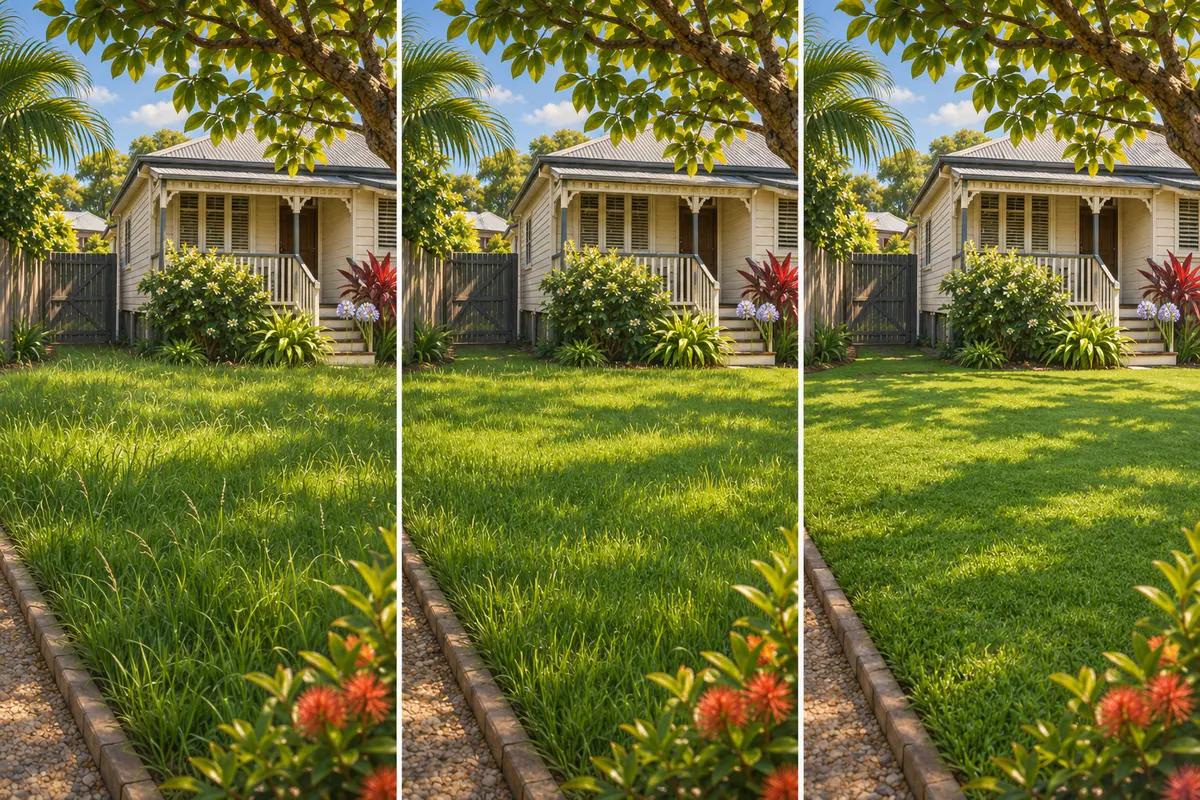
Suppose your normally healthy lawn finishes around 50 mm, but a missed cut leaves it measuring 120 mm in several spots. Returning to 50 mm immediately would remove about 58% of the measured height. If the ground is firm and your mower and turf allow it, a first pass near 80 mm removes roughly a third. Deal with heavy cuttings now; reassess the remaining lawn before choosing a second cut.
Where should the first load go?
If the first strip leaves heavy rows, set aside room for collection before continuing. Empty the catcher only with the mower stopped as its manual directs. Keep soil, plastic and other contaminants out of garden organics, and check your council’s rules for weeds or mixed debris. If the available bin will not hold the material with the lid shut, use an eligible drop-off or offsite collection option rather than leaving a dense layer on the turf.
When should I call it a day?
Stop if the wheels start marking soft soil, the slope feels slippery or the mower keeps clogging. Put off the rest until conditions improve. A second pass is optional: go back only after checking the lawn, the ground and the amount you would remove.