Brown patches in a Brisbane lawn: could they be lawn grubs?
Start at the edge where healthy grass meets the damaged patch. Brown turf can follow heat, uneven watering or a close cut. Fresh chewing and a caterpillar seen feeding give a turf specialist much more to work with than a photo of brown grass alone.
QuickMow · 28 November 2026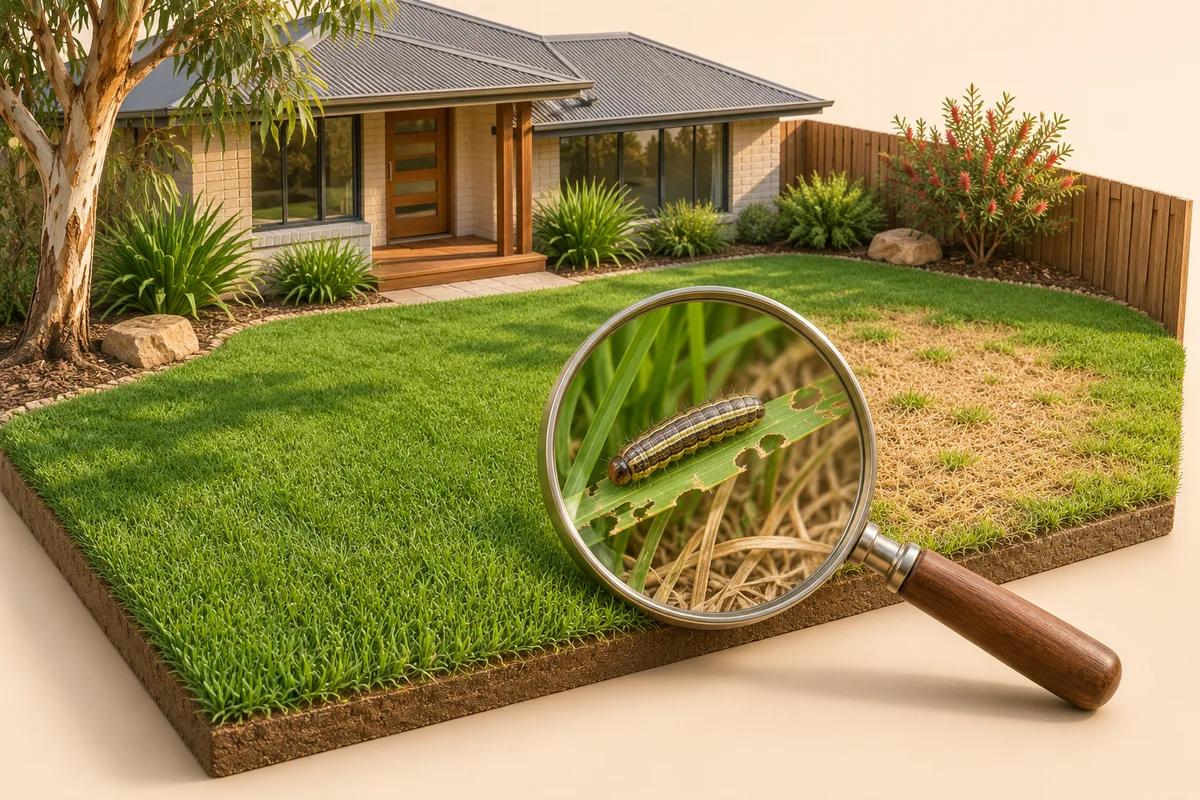
What does the shape of the patch tell me?
Stand back far enough to see the whole patch and its surroundings. Look for a relationship with a path, a sprinkler’s reach, the high point of a slope or the direction the mower travelled. Note when you first saw the change and what happened immediately beforehand. A shape gives you a question to investigate; several causes can produce a similar appearance.
| Pattern | First check |
|---|---|
| A narrow strip beside hot paving | Compare soil moisture and leaf wilt with a greener section of the same lawn. |
| A pale strip visible straight after mowing | Look for wheel tracks or a raised area where a low pass exposed the stems. |
| An irregular edge moving into green grass | Inspect fresh leaves at that edge for chewing. Photograph any insect you see feeding. |
If the damage appeared during a hot spell, the heat-stress checks can help you record whether dry soil and wilting occur in the same place.
Where should I look for lawn armyworm?
In Queensland the name “lawn grub” is often used for lawn armyworm, a moth caterpillar that feeds on grass leaves at night. Examine the transition from green to damaged turf. The centre of an old patch may have little fresh leaf left to inspect. From a safe position at dusk, use a torch to look along the blades for active caterpillars and newly chewed edges.
Birds feeding on a lawn or wasps moving over it can prompt a closer look. Their presence alone tells you little about which insect is there or what caused the damage. Likewise, a caterpillar on the patio is a different observation from one feeding at the moving edge of the patch. Record which you actually saw.
Which photos will help a turf specialist?
Take three views before mowing disturbs the evidence. First, photograph the whole area from a fixed point such as the back step. Next, take a close view with both healthy and damaged leaves in the frame. Finally, photograph any insect in place, with an object of known size near it if practical. Keep the original photos and their dates.
When should I ask for an assessment?
Arrange a turf assessment promptly if the edge is advancing quickly, you repeatedly find active feeding, or the cause remains unclear despite comparing damaged and healthy areas. Share recent mowing height, irrigation changes, weather and any products already applied. A specialist can use those details to identify the cause and discuss suitable options.
A brown patch by itself is a poor basis for choosing a pesticide. QuickMow’s online mowing options cover the work listed on the services page. For an upcoming mow, note the patch location and any area you want left for inspection. On the rest of the lawn, check the cutting height before the first pass.
Keeping track of a changing patch?
Save the wide photo and use the same viewpoint for the next one. For help interpreting wilting after hot weather, read the Brisbane heatwave guide.