Body corporate lawn care checklist
Plan shared mowing, brief contractors and handle access issues, wet turf and partial visits.
QuickMow · 28 November 2026
Body corporate lawn care checklist
The examples and illustrations depict fictional sites. This is a practical coordination guide, not advice on statutory responsibilities.
Start with a clear work order
The front lawn looks tidy, but the courtyard hasn’t been touched. The contractor found the side gate locked and moved on. The committee sees a completion photo but can’t tell whether it covers the whole job. Next time, give the crew a one-page brief with three things: where to mow, what to do if a section isn’t ready, and who can make that call.
Before the visit: mark the work and tell residents what will happen
Walk the property once with the person who usually deals with contractors. Give each work area a name someone new to the complex can recognise. “Front lawn beside the driveway” is more useful than “all common grass.” Mark verges, private courtyards and garden beds separately. If you can’t confirm who maintains a strip, label it confirm first instead of assuming it’s included.
| Put this in the brief | What it prevents |
|---|---|
| Entry gate, unloading spot and a walking route that stays clear | Blocked paths and a crew arriving at the wrong entrance |
| Separate instructions for mowing, edging and sweeping | A tidy cut with loose grass still left across the path |
| Clipping destination and a fallback if the bin is full | Clippings left in a pile or put in the wrong bin |
| One decision contact and separate status for each lawn | A missed area being recorded as complete |
Give residents the visit window and tell them which shared area will be affected. Ask them to move toys, hoses or pet bowls out of the work area without leaving them on a path. Send keys or gate codes directly to the contractor, not in a notice, map or photo.
Agree on the scope and price before the first cut
Use the same site brief when asking for quotes. Ask each contractor to identify what’s included per visit, what’s extras-only, and how they charge for a partial visit or return trip. List mowing, edging, path cleanup and offsite clipping removal separately. Don’t lump hedging, weed treatment or private courtyards into “grounds maintenance” if those jobs aren’t part of the order.
Choose a regular visit window, then decide who can change it when growth slows or a wet week disrupts the schedule. Ask the contractor to flag a section that continually takes longer than expected. If a change is needed, agree to the amended scope before work starts and update the standing brief so the next visit doesn’t revert to the old instructions.
Resident notice you can adapt: “Shared lawn mowing is planned for Thursday, 9 am–noon, weather permitting. The front lawn and courtyard are included; private patios aren’t. Please move toys, hoses and pet bowls off the shared lawns before the visit and keep the path clear. We’ll send an update if part of the work needs to be rescheduled.”
Worked example: eight townhouses, two lawns, one shared path
| Marker | On this site | Instruction |
|---|---|---|
| A | Front lawn beside the driveway | Mow and edge. Take photo 1 from the driveway edge when it’s safe and clear. |
| B | Shared courtyard behind the side gate | Mow and edge if the surface is suitable and the lawn is clear. Take photo 2 from the gate. |
| C | Concrete path connecting the front entrance and townhouses | Keep clear. Sweep loose clippings after the cut. |
| Out of scope | Private patios beside the courtyard | Do not enter or mow. |
Example handoff: “Mow A and B only. Use the side gate for B and keep path C clear. If B is too soft to cut without rutting, leave it and message the nominated contact. Use the garden organics bin only if the local rules allow it and there’s room. If not, use the agreed fallback; don’t leave clippings on the path or near drains.”
On the day, the front lawn is firm, but the shaded courtyard is still soft after rain. The crew completes A and records B as deferred without running the mower across it to test it. The committee contact checks the court again before confirming access and a return visit. No one has to infer what “job done” means.
Make the same decision when a different contractor turns up
| What the crew finds | What to do on this visit | What the coordinator records |
|---|---|---|
| Side gate is locked | Try the agreed contact. If entry can’t be arranged, leave B; do not improvise access. | B deferred: access. Confirm who will open the gate for the return. |
| Water pooled on the courtyard or turf deforms underfoot | Leave the affected zone. Complete another zone only if it can be worked independently. | B deferred: wet ground. Check conditions before confirming another window. |
| Residents or pets are still in the work area | Pause that zone. Resume only once it’s clear; keep normal pedestrian access available. | Hold reason and whether that zone was completed or needs a return. |
| Garden organics bin is full | Follow the pre-agreed fallback. If it would incur an unapproved charge, ask before proceeding with that option. | Clipping destination, approval if needed, and whether the work changed. |
| A resident asks for their private patio to be cut | Refer the request to the coordinator. Keep to the issued scope until it’s changed. | Requested extra, scope decision and any revised price. |
Why record the reason? Two missed courtyard visits may look like poor mowing performance. If both were caused by a locked gate, the permanent fix is an access arrangement, not a different mowing schedule. If the same patch repeatedly stays wet, record the location and ask the committee to consider it separately rather than marking it as skipped indefinitely.
Four body corporate scenarios that need more than a mowing reminder
1. Apartment entry: the only step-free route runs beside the lawn
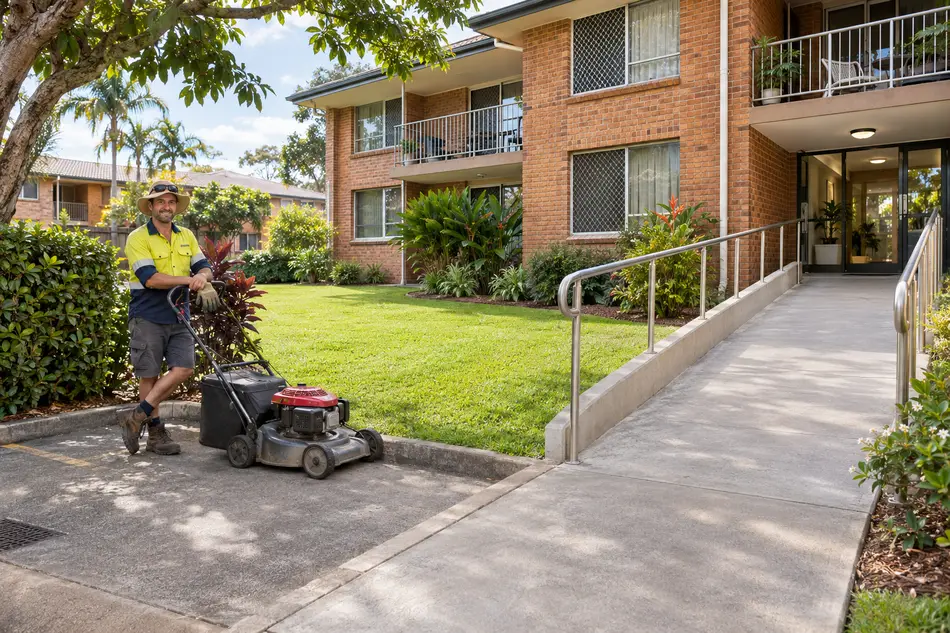
Before: Walk the route from the street or car park to the lobby. Mark the ramp, landings and door approach as no-staging areas. Agree where tools and grass bags can sit without obstructing pedestrians. If the entry is busiest during deliveries or resident transfers, pick a quieter window for the adjacent grass.
On the day: Start with a zone away from the entry if the ramp is in use. If the contractor can’t work the edge without interrupting the route, defer that edge and agree a return. Don’t assume stairs are a usable alternative. Close out with a check that the ramp and landings are clear of tools and clippings.
2. Storm cleanup: the front lawn is ready but the back lawn isn’t
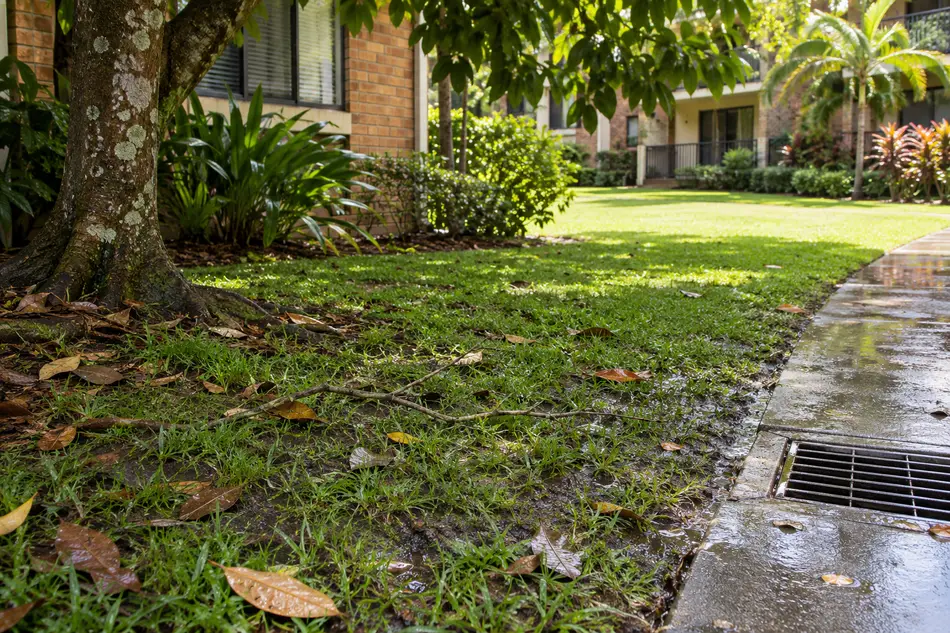
Before: Split routine mowing, small litter pickup and storm cleanup into separate instructions. After rain, check the sunny and shaded zones separately; a dry driveway says little about the turf. Ask the contractor to flag branches or other hazards that are outside the agreed work before starting that section.
On the day: If the front lawn is suitable and can be reached independently, complete it. Defer the soft or debris-covered zone without driving machinery over it to test it. Record the reason and who will arrange clearance or recheck conditions. Keep collected debris and clippings away from the drain. If storm debris removal needs a separate quote, check the scope and price before authorising it.
3. Exclusive-use courtyard or verge: two people give different instructions
Before: Put disputed areas in a separate confirm first row. Give the manager or designated coordinator a labelled photo and exact location to check against the scheme’s records and existing service scope. A fence line or a resident’s request isn’t enough to add a strip to the order.
On the day: Continue the undisputed work and leave the affected strip alone. Record who raised the request, which zone is affected and who will confirm the scope. If the strip is added, update the standing work order and agree any price change before it’s cut. Avoid treating a one-off instruction as a permanent change.
4. Larger complex: a second access gate, one full bin and a partial invoice
Before: Give the contractor a separate route and photo point for each block. Check who opens each gate, which storage area or bin is approved, and what counts as a separately chargeable return. Nominate a backup contact so the crew doesn’t have to chase multiple committee members.
On the day: If the second gate is locked and the bin at the first block is full, treat those as two exceptions. Use only the agreed clipping fallback at block one; defer block two if access fails. Record both outcomes against the same work order. When the invoice arrives, compare the billed visit, disposal and return charges with the agreed terms and the work actually recorded. Query any mismatch before sign-off.
After the visit: close out each area, not just the job
Use the same photo points before and after where practical. Keep the frame on the lawn and avoid residents, number plates and private interiors. If an area couldn’t be accessed, record that fact rather than taking a photo that implies it was serviced. A short written record is enough:
A: Complete; front lawn and edges cut. B: Deferred; ground too soft. C: Clear of clippings. Next action: Nominated contact to confirm a return window with the contractor and notify residents once booked.
A filled-in exception log
| Visit | Zone | Outcome | Next action | Owner |
|---|---|---|---|---|
| Thursday, 9 am–noon | A — front lawn | Mowed and edged; photo 1 filed | None | — |
| Thursday, 9 am–noon | B — shaded courtyard | Deferred; soft after rain | Recheck Friday morning. If suitable, confirm access and a return window; notify residents only after it’s booked. | Site coordinator |
| Thursday, 9 am–noon | C — shared path | Cleared and left open | None | — |
Keep the visit record in one place alongside the current brief. Before signing off the invoice, check it against the completed zones and the agreed partial-visit terms. If the return work is billed later, link it to the original deferment so it isn’t mistaken for a second full visit.
Copy this into your next work order
Open the printable shared lawn handover card for a blank worksheet and a clearly labelled fictional example.
- Visit window and resident notice: ___
- Mow / edge / sweep by zone: ___
- Skip or confirm first: ___
- Entry, unloading and path to keep clear: ___
- Clipping destination and overflow plan: ___
- When to stop or defer; who decides: ___
- Photo points and reporting: ___
- Completed / deferred by zone; return-visit owner: ___
Keep the brief for the next contractor, and update it whenever a gate, garden bed or access route changes.
Arranging regular mowing for a scheme? See QuickMow’s body corporate lawn mowing services for common-property scopes, access notes and completion records.